
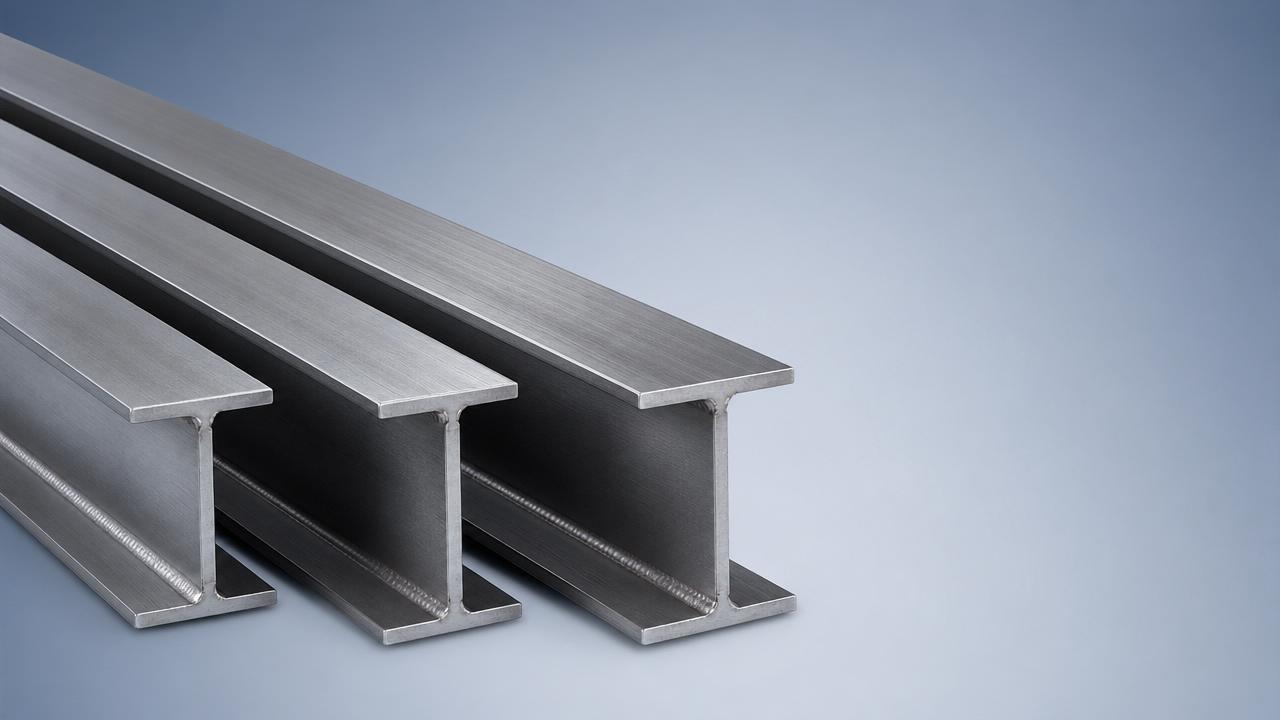
Editor’s Note: Singapore’s Productivity and Standards Board (PSB) has updated its regulatory framework for imported structural steel, introducing new certification requirements that directly affect Chinese steel exporters. Effective 15 May 2026, the change reflects tightening quality governance in Singapore’s public infrastructure and industrial construction sectors — where structural integrity is non-negotiable.
Event Overview
On 15 May 2026, PSB officially revised the Imported Structural Steel Pre-Assessment Notice, adding welded H-section steel produced in China to the mandatory pre-assessment list. Specifically, products conforming to Chinese standards Q235 and Q355 must now be accompanied by both AWS D1.1 (American Welding Society Structural Welding Code) and ISO 3834 (International Standard for Quality Requirements for Fusion Welding of Metallic Materials) certification documents — including valid audit records. The requirement applies immediately to all shipments destined for public building and industrial plant projects in Singapore.
Industries Affected
Direct Export Trading Enterprises
Chinese trading companies acting as exporters or authorized agents for Q235/Q355 welded H-beams face immediate operational impact. Their role as documentation gatekeepers means they must now verify, consolidate, and submit dual-certification evidence prior to customs clearance. Failure to provide compliant documentation triggers automatic rejection at PSB’s pre-assessment stage — halting project procurement timelines and potentially voiding tender eligibility.
Raw Material Procurement Enterprises
Firms sourcing base materials (e.g., billets, slabs, or hot-rolled sections) for downstream welding and fabrication are indirectly affected. While not directly certifying finished H-beams, their supply contracts increasingly require traceability to certified mills and weld procedure specifications aligned with AWS D1.1. This shifts due diligence upstream — demanding tighter vendor qualification protocols and greater transparency in mill-level quality assurance systems.
Processing & Fabrication Manufacturers
Domestic Chinese fabricators producing welded H-sections must now align internal welding procedures, personnel qualifications, and quality control processes with both AWS D1.1 and ISO 3834. Unlike single-standard compliance, dual certification requires concurrent maintenance of two distinct auditing regimes — one focused on structural weld design and execution (AWS), the other on organizational welding quality management (ISO). This increases administrative load, third-party audit frequency, and staff training investment.
Supply Chain Service Providers
Certification consultants, inspection agencies, and logistics intermediaries supporting Chinese steel exports must adapt service offerings. Demand is rising for integrated audit support covering both AWS D1.1 and ISO 3834, as well as PSB-specific document packaging guidance. Providers lacking cross-standard expertise risk losing clients to more specialized technical partners — especially those with established PSB engagement experience.
Key Considerations and Recommended Actions
Verify Certification Validity Against PSB’s Acceptance Criteria
AWS D1.1 certification must be issued by an AWS-accredited body; ISO 3834 certification must be granted under ISO/IEC 17065 by a PSB-recognized certification body. Self-declared conformity or certificates from unlisted entities will not satisfy the requirement.
Align Production Records with Dual-Standard Traceability
Manufacturers must retain and organize production records — including WPS/PQR documentation, welder performance qualifications, NDT reports, and calibration logs — to demonstrate consistent compliance with both standards across each batch. PSB may request these during verification.
Update Tender Submissions and Contract Clauses
Exporters should revise standard tender responses and commercial contracts to explicitly reference dual certification status, validity periods, and audit history. Including PSB-specific annexes (e.g., pre-assessment application summaries) strengthens bid competitiveness.
Editorial Perspective / Industry Observation
Observably, this move signals a broader recalibration in Singapore’s approach to imported construction materials: it prioritizes system-level quality assurance over product-level test reports alone. Analysis shows PSB is not merely raising barriers — it is shifting enforcement focus toward process discipline and institutional capability. From an industry perspective, the pairing of AWS D1.1 and ISO 3834 is strategic: the former ensures engineering fitness-for-purpose, while the latter validates sustainable organizational competence. Current evidence suggests fewer than 12% of Chinese welded H-beam producers hold both certifications concurrently — indicating significant capacity gaps remain. That said, the policy is better understood as a catalyst for upgrading than a punitive measure.
Conclusion
This regulatory update underscores Singapore’s commitment to embedding international best practices into its built environment supply chain. For Chinese steel exporters, compliance is no longer optional — but neither is it insurmountable. With structured preparation and targeted investment in welding quality systems, affected enterprises can convert compliance pressure into long-term credibility and market differentiation. The real test lies not in certificate acquisition, but in sustained, auditable implementation.
Source Attribution
Official notice published by Singapore PSB on 15 May 2026: Imported Structural Steel Pre-Assessment Notice (Revised Edition). Available via PSB’s Construction Materials Regulatory Portal (https://www.psb.gov.sg/construction-materials).
Additional guidance referenced: AWS D1.1-2020, ISO 3834-2:2021.
Note: PSB has indicated plans to publish a Frequently Asked Questions (FAQ) supplement and host industry briefings in Q3 2026 — content to be monitored closely.
Related Posts
- ▶ Australia's Coking Coal Exports Surge 20% YoY in April 2026
- ▶ US CBP Tightens Steel Origin Verification for H-Beams & I-Beams
- ▶ Iran opens Strait of Hormuz for commercial vessels during ceasefire, risks remain
- ▶ Tata Steel Faces Closure of Coking Units in the Netherlands
- ▶ Nucor Raises Hot-Rolled Coil Prices Again by $10 per Ton in U.S.
- ▶ Global pig iron prices rose by $5–20 per ton in the first half of March
- ▶ Nucor Raises HRC Price to $1,010/Ton - 8th Weekly Increase
- ▶ Tata Steel UK raises hot-rolled coil prices by £125/t
- ▶ Global Steel Production Drops 6.5% in January 2026
- ▶ EU Parliament Seeks Ban on Russian Steel Imports
Online Message


Leave A Message
If you are interested in our products and want to know more details, please leave a message here, we will reply you as soon as we can.