
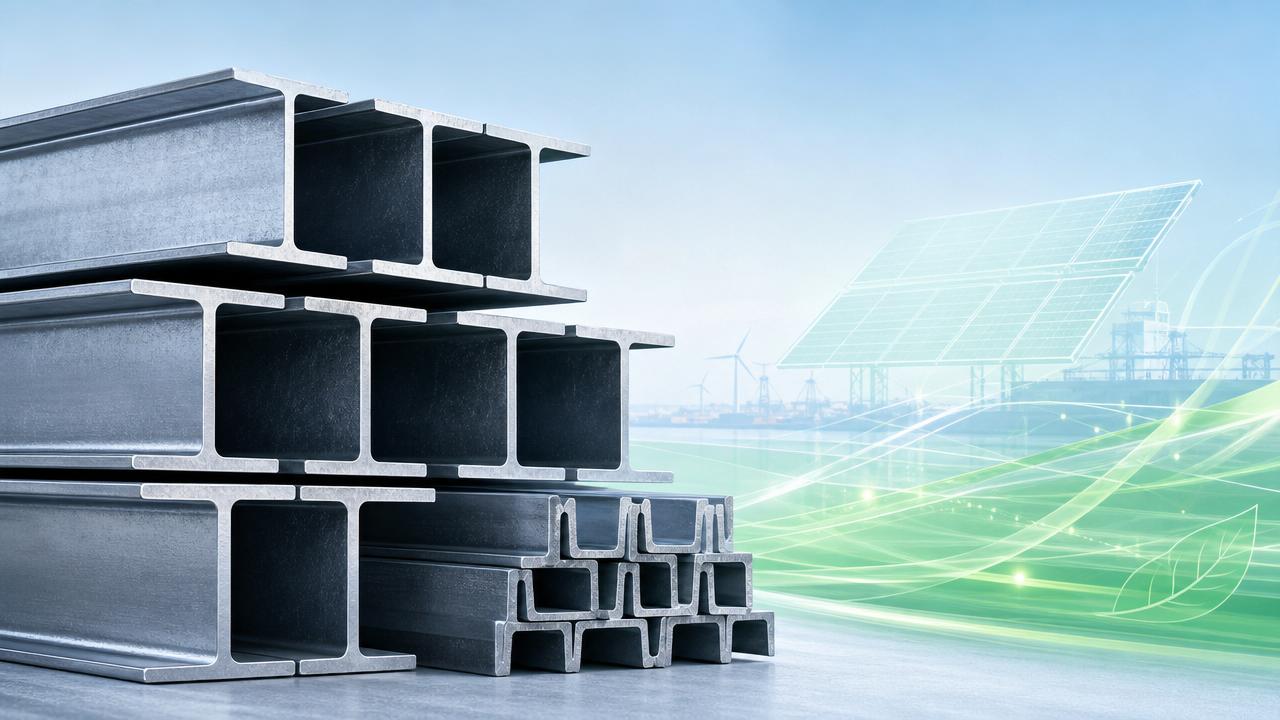
Ningbo-Zhoushan Port officially activated its常态化 Low-Carbon Export Channel for structural steel on May 16, 2026. This initiative targets exporters of H-beams, I-beams, and channel steel shipping to the EU, Singapore, and Mexico — sectors where carbon transparency and green energy verification are increasingly decisive in customs clearance and market access. The channel’s 6-hour expedited release, enabled by verified Life Cycle Assessment (LCA) reports and monthly green electricity proof, signals a material shift in how low-carbon compliance is operationalized at major Chinese export gateways.
Event Overview
On May 16, 2026, Ningbo-Zhoushan Port announced the full operational launch of its ‘Low-Carbon Export Channel for Structural Steel’. Export orders for H-beams, I-beams, and channel steel qualify if accompanied by: (1) an LCA report issued by a CNAS-accredited institution; and (2) verifiable green electricity usage documentation — either grid-sourced renewable power purchase evidence or on-site photovoltaic self-consumption registration. Under this framework, customs inspection cycle is reduced to within six hours. In its first week, 37 Chinese structural steel exporting enterprises utilized the channel for shipments to the EU, Singapore, and Mexico, reporting an average logistics cost reduction of 11%.
Industries Affected
Direct Exporters (Structural Steel Trading & Manufacturing Exporters)
These firms are directly subject to the channel’s eligibility criteria and benefit most immediately from faster clearance. Their exposure arises from the mandatory requirement to procure third-party LCA reports and maintain auditable green electricity records — both adding new compliance layers to pre-shipment workflows.
The impact manifests primarily in documentation lead time, verification costs, and internal coordination between sustainability, logistics, and quality assurance teams. Firms without existing LCA or green energy tracking systems face onboarding friction.
Raw Material Suppliers (Steel Billet, Slab, and Rebar Producers)
While not direct users of the channel, upstream suppliers may face increasing data requests from downstream exporters seeking LCA input data (e.g., blast furnace energy mix, scrap ratio, emission factors). Their influence lies in enabling accurate, granular upstream inventory for LCA modeling.
Impact is indirect but growing: demand for traceable, low-carbon primary inputs may rise as exporters seek to optimize overall product carbon footprint — particularly for EU-bound goods subject to CBAM alignment expectations.
Downstream Fabricators & EPC Contractors (Non-exporting but Supplying Export Projects)
Some fabricators supply finished structural components to overseas infrastructure or building projects led by export-oriented general contractors. Though they do not file export declarations themselves, their material sourcing and fabrication energy use feed into the final product’s LCA boundary.
Impact centers on data readiness: if their client’s export filing includes scope 3 emissions from fabrication, these entities may be asked to provide energy consumption logs or utility bills — especially where solar generation is claimed.
Supply Chain Service Providers (LCA Consultants, Green Energy Verification Agencies, Customs Brokers)
These actors experience direct demand growth. CNAS-accredited LCA providers and green electricity certification services are now operationally embedded in the export workflow — not optional add-ons. Brokers must verify document validity before submission, introducing a new checkpoint.
Impact includes service volume increase, tighter turnaround expectations (aligned with 6-hour clearance), and heightened need for cross-functional literacy — e.g., brokers understanding LCA system boundaries, consultants interpreting grid-mix certificates.
What Relevant Enterprises or Practitioners Should Focus On
Monitor official implementation guidance beyond initial rollout
The current channel applies only to H-beams, I-beams, and channel steel. Analysis shows that expansion to other steel products (e.g., hollow sections, plates) or additional destinations (e.g., UK, Canada, Japan) is plausible — but remains unconfirmed. Stakeholders should track announcements from Ningbo Customs and Zhejiang Provincial Department of Ecology and Environment for scope updates.
Prioritize verification readiness for high-priority markets and product lines
Observably, early adopters focused on EU-bound shipments — consistent with tightening EU environmental import requirements. Firms targeting Singapore (under its Green Plan 2030) or Mexico (increasingly referencing ISO 14067 in public tenders) should treat LCA + green electricity documentation as a baseline capability, not a one-off effort.
Distinguish policy signal from immediate obligation
This channel is voluntary — not a regulatory mandate. From industry perspective, it functions as a de facto incentive mechanism: faster clearance and cost savings reward proactive decarbonization. However, it does not replace statutory obligations (e.g., China’s mandatory carbon reporting for key emitters). Companies should avoid conflating channel participation with broader compliance status.
Align internal data collection with LCA boundary requirements now
Preparing an LCA report requires 12–18 months of energy, material, and transport data. Current more suitable approach is to begin logging electricity source breakdowns (grid vs. solar), natural gas consumption per production line, and logistics fuel types — even if formal LCA isn’t yet commissioned. This avoids retrospective data gaps when scaling up channel usage.
Editorial Perspective / Industry Observation
This initiative is better understood as an operational pilot reflecting port-level responsiveness to trade-related carbon policy trends — not a national regulatory shift. Observably, Ningbo-Zhoushan Port is testing how standardized, document-driven carbon verification can accelerate physical logistics — a model other ports (e.g., Shanghai, Qingdao) may assess for replication.
Analysis shows the 6-hour clearance window is contingent on complete, pre-verified documentation — meaning the burden shifts upstream to exporters’ preparation capacity, not customs processing speed alone. Its success hinges less on policy novelty and more on interoperability between LCA standards, green electricity accounting frameworks, and customs IT systems.
Industry needs to watch whether this channel evolves into a benchmark for low-carbon trade facilitation — or remains a niche pathway dependent on voluntary adoption and third-party verification capacity.
The launch of Ningbo Port’s Low-Carbon Export Channel marks a concrete step toward integrating carbon performance into routine trade operations — not as a standalone certification, but as a functional enabler of speed and cost efficiency. It does not replace broader decarbonization strategy, nor does it eliminate documentation complexity. Rather, it reframes carbon data as infrastructure — something to be built, maintained, and leveraged like any other logistical asset.
Information Source: Official announcement by Ningbo-Zhoushan Port Group, May 16, 2026. Scope and eligibility criteria confirmed via publicly released operational guidelines. Note: Expansion to additional steel products or jurisdictions remains under observation and has not been formally announced.
Related Posts
- ▶ Australia's Coking Coal Exports Surge 20% YoY in April 2026
- ▶ US CBP Tightens Steel Origin Verification for H-Beams & I-Beams
- ▶ Iran opens Strait of Hormuz for commercial vessels during ceasefire, risks remain
- ▶ Tata Steel Faces Closure of Coking Units in the Netherlands
- ▶ Nucor Raises Hot-Rolled Coil Prices Again by $10 per Ton in U.S.
- ▶ Global pig iron prices rose by $5–20 per ton in the first half of March
- ▶ Nucor Raises HRC Price to $1,010/Ton - 8th Weekly Increase
- ▶ Tata Steel UK raises hot-rolled coil prices by £125/t
- ▶ Global Steel Production Drops 6.5% in January 2026
- ▶ EU Parliament Seeks Ban on Russian Steel Imports
Online Message


Leave A Message
If you are interested in our products and want to know more details, please leave a message here, we will reply you as soon as we can.