
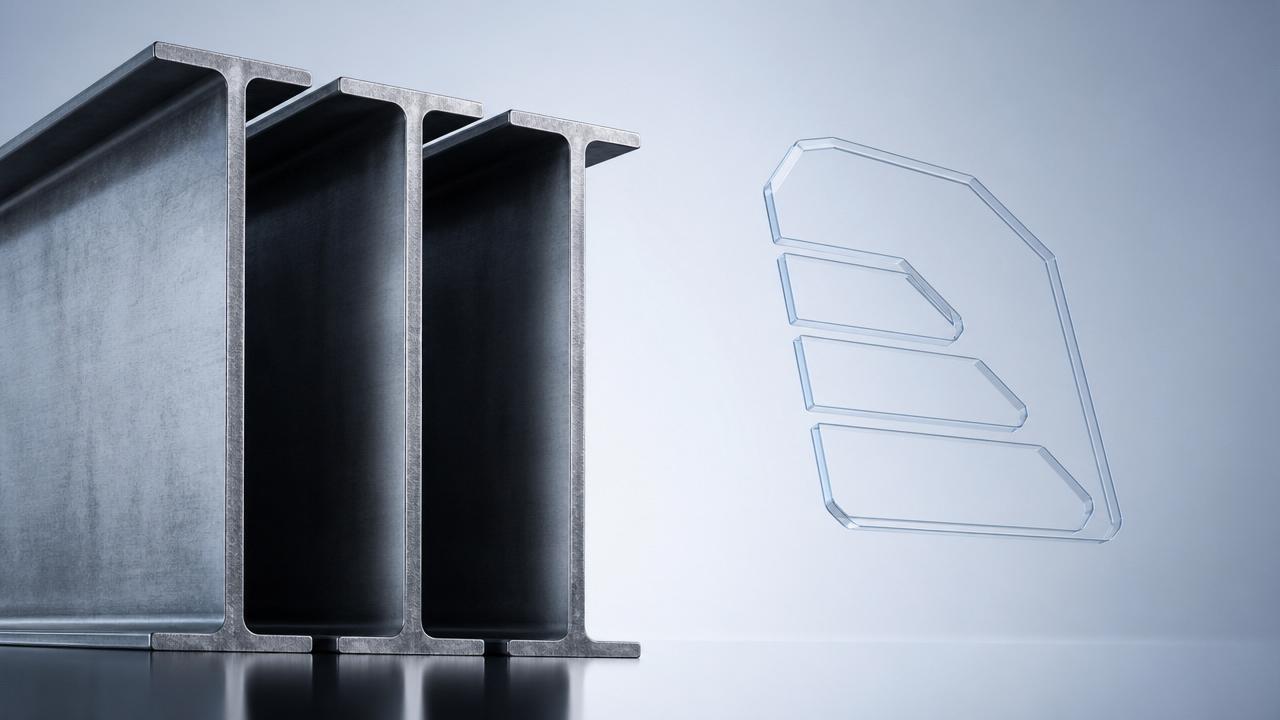
Brazil’s National Institute of Metrology, Standardization and Industrial Quality (INMETRO) announced on May 16, 2026, an accelerated timeline for mandatory energy efficiency labeling of hot-rolled H-beams imported from China. The requirement—now effective October 1, 2026—directly impacts exporters, fabricators, and project suppliers engaged in Brazil’s public procurement and large-scale infrastructure sectors.
Event Overview
On May 16, 2026, INMETRO issued a supplementary notice confirming that the mandatory energy efficiency certification for structural steel sections—including hot-rolled H-beams—will take effect on October 1, 2026. This represents an acceleration from the originally scheduled Q1 2027 implementation. The notice specifies that Chinese exporters must complete IEC 62301-compliant no-load power consumption testing and register test reports with INMETRO-accredited laboratories prior to market entry. Products failing to meet this requirement will be excluded from Brazil’s government procurement lists and major infrastructure project tenders.
Industries Affected
Direct Exporters (China-based Steel Exporters)
Exporters supplying hot-rolled H-beams to Brazil are directly subject to the new deadline. Non-compliance means loss of eligibility for public-sector contracts—a key revenue channel for many Chinese steel exporters targeting Latin American infrastructure development. The requirement introduces both technical validation (IEC 62301 testing) and administrative compliance (lab accreditation and documentation submission), increasing pre-shipment lead time and verification costs.
Steel Fabricators & Project Suppliers (Brazil-based or Multinational)
Fabricators sourcing H-beams for Brazilian public works—including bridges, industrial facilities, and federal buildings—must now verify upstream supplier compliance before tender submission. Absence of valid INMETRO certification may invalidate bids or trigger contractual non-conformance clauses. This shifts due diligence upstream and increases technical documentation requirements in procurement workflows.
Testing & Certification Service Providers
Laboratories accredited by INMETRO—or seeking such accreditation—to conduct IEC 62301 testing on metallic structural products face increased demand starting mid-2026. Capacity planning, cross-border sample logistics, and alignment with INMETRO’s reporting templates become urgent operational considerations.
Key Focus Areas and Recommended Actions
Monitor Official Updates from INMETRO and ABNT
INMETRO’s May 16 notice is a supplement—not a standalone regulation. Stakeholders should track official updates via INMETRO’s Diário Oficial da União publications and ABNT (Brazilian Association of Technical Standards) technical bulletins for clarifications on scope, transitional provisions, or lab accreditation criteria.
Prioritize IEC 62301 Testing for High-Volume H-Beam Grades
Not all H-beam dimensions or grades may be equally represented in Brazilian public tenders. Exporters should identify historically high-demand specifications (e.g., ASTM A656 Gr. 80, or common metric sizes like HEA 200–400) and initiate testing for those first—avoiding blanket testing across full product portfolios until regulatory scope is further clarified.
Distinguish Between Policy Signal and Enforceable Requirement
The October 1, 2026 deadline applies only to products entering Brazil *after* that date for use in regulated procurement channels. It does not retroactively affect contracts signed or shipments cleared before the effective date. Companies should audit existing order pipelines and delivery schedules to assess exposure and avoid premature retesting.
Initiate Lab Coordination and Documentation Preparation Now
INMETRO-accredited labs require lead time for scheduling, sample preparation, and report issuance. Exporters should confirm lab availability, align on test specimen requirements (e.g., finished product vs. representative coupons), and prepare bilingual technical dossiers—including mill test reports and dimensional certifications—to support IEC 62301 submissions.
Editorial Perspective / Industry Observation
Observably, this move reflects INMETRO’s broader strategy to align structural material regulations with Brazil’s National Energy Efficiency Program (PROCEL) objectives—notably reducing embodied energy in public infrastructure. Analysis shows the timing coincides with upcoming federal budget cycles and planned investments in transportation and energy infrastructure, suggesting the certification serves both environmental policy goals and procurement risk mitigation. From an industry standpoint, it is more accurately interpreted as an enforcement signal than a finalized technical barrier: while the deadline is fixed, implementation details—including acceptable test methods for non-motorized structural products under IEC 62301—remain subject to clarification. Continued observation of INMETRO’s technical guidance documents over Q3 2026 is therefore warranted.
Conclusion: This regulatory acceleration underscores the growing integration of energy performance criteria into building material standards—even for non-electrical products. For affected stakeholders, the October 2026 deadline is operationally binding but remains contingent on final interpretation of IEC 62301 applicability to passive steel sections. It is best understood not as a static compliance checkpoint, but as the first phase of an evolving technical access requirement for the Brazilian construction materials market.
Source: Official notice issued by INMETRO on May 16, 2026 (Supplementary Notice No. [unspecified in source]; referenced via INMETRO’s public communications portal).
Note: Specifics regarding lab accreditation procedures, test report format, and exemptions remain under active clarification; stakeholders are advised to monitor INMETRO’s official channels through September 2026.
Related Posts
- ▶ Australia's Coking Coal Exports Surge 20% YoY in April 2026
- ▶ US CBP Tightens Steel Origin Verification for H-Beams & I-Beams
- ▶ Iran opens Strait of Hormuz for commercial vessels during ceasefire, risks remain
- ▶ Tata Steel Faces Closure of Coking Units in the Netherlands
- ▶ Nucor Raises Hot-Rolled Coil Prices Again by $10 per Ton in U.S.
- ▶ Global pig iron prices rose by $5–20 per ton in the first half of March
- ▶ Nucor Raises HRC Price to $1,010/Ton - 8th Weekly Increase
- ▶ Tata Steel UK raises hot-rolled coil prices by £125/t
- ▶ Global Steel Production Drops 6.5% in January 2026
- ▶ EU Parliament Seeks Ban on Russian Steel Imports
Online Message


Leave A Message
If you are interested in our products and want to know more details, please leave a message here, we will reply you as soon as we can.